The difference in performance and principle structure
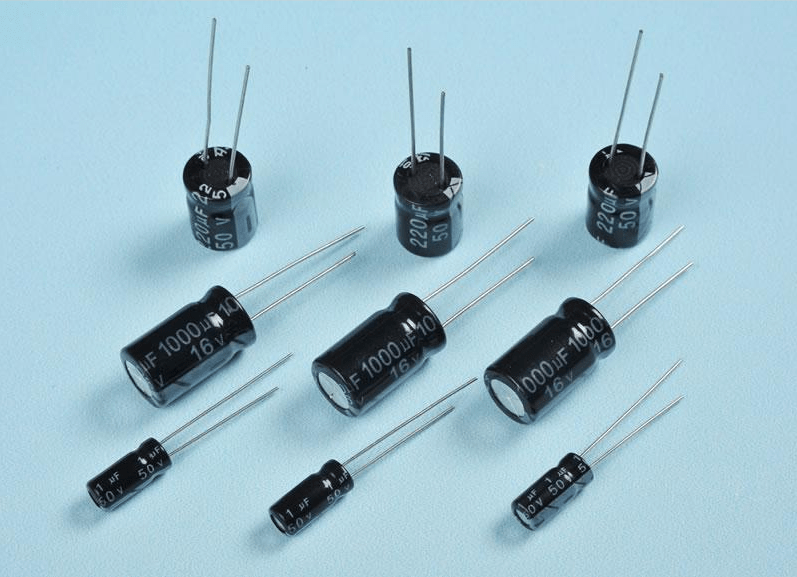
Same in principle: (1) They both store and release charges; (2) The voltage on the electrode plate (here, the electromotive force accumulated by the charge is called voltage) cannot be abruptly changed.
The difference lies in the different media, different performance, different capacity, different structures, and different use environments and uses. On the other hand, according to the needs of production practice, people have experimentally manufactured capacitors with various functions to meet the normal operation of various electrical appliances and the operation of new equipment. With the development of science and technology and the discovery of new materials, better and more diverse capacitors will continue to emerge.
Different media: What is a dielectric? In fact, the material between the two plates of the capacitor has a polar capacitor. Most of the electrolyte is used as the dielectric material. Usually, a capacitor with the same volume has a large polar capacitor. In addition, the polarized capacitors produced by different electrolyte materials and processes will have different capacities in the same volume. There is also a close relationship between the withstand voltage and the use of dielectric materials: there are many non-polar capacitor dielectric materials, most of which use metal oxide films, polyester, etc. Due to the reversible or irreversible performance of the medium, the use environment of polar and non-polar capacitors is determined.
Different performance: Performance is the requirement for use, and maximum demand is the requirement for use. If a metal oxide film capacitor is used for filtering in the power supply part of a TV, and the capacitor capacity and withstand voltage required by the filtering must be achieved, I am afraid that only a power supply can be installed in the cabinet. Therefore, only polarized capacitors can be used for filtering, and polarized capacitors are irreversible. In other words, the positive electrode must be connected to the high potential terminal, and the negative electrode must be connected to the low potential terminal. Generally, the electrolytic capacitor is above 1 microfarad for coupling, decoupling, and power supply filtering. The non-polar capacitors are mostly below 1 microfarad and participate in resonance, coupling, frequency selection, current limiting, etc. Of course, there are also large-capacity and high-withstand voltage, which are mostly used for reactive compensation of power, phase shift of motors, and shift of variable-frequency power.
Different structures: In principle, regardless of the tip discharge, any shape of capacitor can be used in the environment. The commonly used electrolytic capacitors (with polar capacitors) are round, and square ones are rarely used. Non-polar capacitors have various shapes, such as tube type, deformed rectangle, sheet type, square type, round type, combined square type and round type. Of course, there are intangibles. The intangibles here refer to distributed capacitance. The distributed capacitance must not be ignored in high frequency and intermediate frequency devices.
The ideal capacitor is originally non-polar. However, in practice, in order to obtain large capacity, some special materials and structures are used, which leads to the fact that some actual capacitors are polarized. Common polar capacitors include aluminum electrolytic capacitors and tantalum electrolytic capacitors. Electrolytic capacitors are generally relatively large in capacity, so if you want to make a large-capacity non-polar capacitor, it will not be so easy and the volume will become very large. This is why in actual circuits, there are so many polar capacitors. Because it is relatively small and the voltage in such a circuit has only one direction, a polarized capacitor can come in handy. We use polar capacitors to avoid its disadvantages and to take advantage of them. We can also understand in this way: a polarized capacitor is actually a capacitor that can only be used in one voltage direction. Non-polar capacitors can be used in both voltage directions. Therefore, from the point of voltage direction alone, non-polar capacitors are better than polar capacitors.
The most basic structure of electrolytic capacitors is polar, which is determined by the production process. Compared with non-polar capacitors, the principle characteristics of electrolytic capacitors make it easy to achieve large capacity with less material and smaller volume. However, because of its polarity, it can only be applied to a certain DC component, but it is not suitable for pure AC. The polarity of the electrolytic capacitor must conform to the direction of the DC component and cannot be used in reverse. An alternative type of electrolytic capacitor is a non-polar electrolytic capacitor. This electrolytic capacitor can also be used for pure AC like ordinary non-polar capacitors, and can have a larger capacity than a capacitor in the same volume, but the volume is about twice as large as that of the same capacity with polar electrolysis. After all, it is the technology of electrolytic capacitors, so its AC characteristics cannot be completely aligned with that of capacitors. It lies between capacitors and electrolysis. Compared with capacitors and polar electrolytic capacitors, the use conditions of non-polar electrolytic capacitors are more severe. And when it is applied, it should be treated more as an electrolysis. It can be seen from the above analysis that it is perfectly possible to use a non-polar capacitor instead of a polar capacitor. As long as the capacity, working voltage, and volume can meet the requirements, they can be replaced.
Polarized capacitor refers to a type of capacitor such as electrolytic capacitor. It is formed by the anode’s aluminum foil and the cathode’s electrolyte respectively, and then a layer of aluminum oxide film produced on the anode’s aluminum foil is used as the dielectric capacitor. Due to this structure, it has a polarity. When the capacitor is connected in the positive direction, the aluminum oxide film will remain stable due to the electrochemical reaction; when it is connected in the reverse direction, the aluminum oxide layer will become thin, making the capacitor easily damaged by breakdown. So the electrolytic capacitor must pay attention to the polarity in the circuit. But ordinary capacitors are non-polar, so the anode or cathode of two electrolytic capacitors can be connected in series to form a non-polar electrolytic capacitor.
Is an electrolytic capacitor in series a non-polar capacitor?
Of course, the method of two electrolytic capacitors in parallel cannot work, and the two electrolytic capacitors in series are still not working without proper bias voltage. And adding a bias voltage is quite complicated, especially if the capacitor (two series) are not grounded at both ends (the bias voltage must be floating). Considering the complexity of adding a bias voltage, it is better to use this method: connect two capacitors with negative stages, and connect a high-current diode to the two capacitors.
Of course, there is polarity in parallel. If anti-parallel, it is non-polar, but it is non-polar that cannot be used. If it is reverse series, it is not advisable, because if you do the experiment, you will find that there must be a capacitor to withstand the reverse voltage. If the voltage is large, it will blow up. Unless you have special measures that always allow the voltage to be applied to the capacitor that bears the positive voltage. There have been related records that two electrolytic capacitors of the same capacity can be connected in series, but a diode must be connected in anti-parallel to prevent reverse breakdown of the electrolytic capacitor. Later it turned out that the effect was ok.
 electronics world